

Global Economic Governance
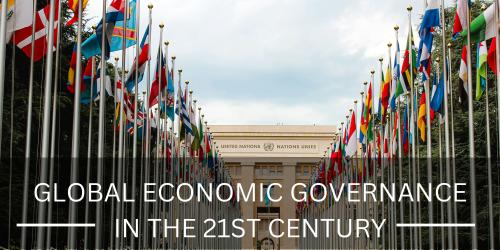
Global economic governance is central to how countries manage trade, finance, development, technology, and economic stability in an increasingly interconnected world. IIEP’s Global Economic Governance initiative examines the role, performance, and evolution of international economic institutions in the 21st century.
Launched in 2011 with the generous support of an anonymous donor, this signature initiative builds on IIEP’s research strengths and its location in Washington, D.C., at the center of international economic policymaking.
Areas of Focus. IIEP programming and research in this area have explored the changing role of institutions such as the International Monetary Fund, World Bank, World Trade Organization, Inter-American Development Bank, and other organizations shaping the global economy. Topics include international financial governance, trade rules, development finance, digital trade, data governance, emerging economies, sustainable development, and global policy coordination.
Institutions & Partnerships. The global economy has changed significantly since many of today’s core international economic institutions were created in the post-World War II period. Globalization, the rise of emerging economies, technological change, and sustainable development challenges have raised new questions about how these institutions should adapt.
IIEP regularly partners with organizations such as the IMF and World Bank, as well as GW and policy partners including the Digital Trade and Data Governance Hub, the Institute for International Science and Technology Policy, the Council on Economic Policy, and The Growth Dialogue.
Research and Public Dialogue. Since its founding, IIEP faculty and affiliated scholars have contributed to research and policy dialogue on global economic governance through academic research, policy forums, seminars, and conferences. This initiative brings together scholars, policymakers, practitioners, and students to examine how international institutions can respond to current and emerging challenges in the global economy.

May 20, 2026 - 10:00 AM
World Bank Enterprise Surveys 20th Anniversary Forum and Conference 2026

April 14, 2026 - 8:30 AM
Future of Finance & Trade in Africa 3.0

March 24, 2026 - 4:00 PM
The Doom Loop: Why the World Economic Order Is Spiraling into Disorder
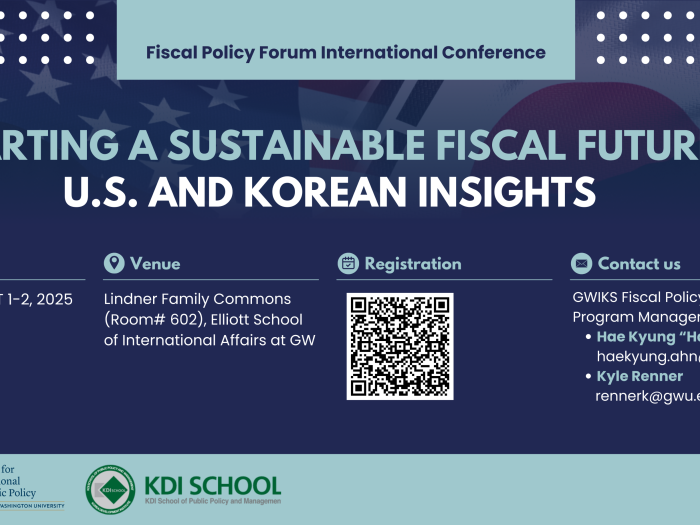
October 1, 2025 to October 2, 2025
Charting a Sustainable Fiscal Future: U.S. and Korean Insights

September 26, 2025 - 3:30 PM
International Business in a Turbulent Era

September 17, 2025 - 12:00 PM
Corporations and the Rule of Law
December 2, 2024 - 8:00 AM
The Economics of Sustainable Development
November 15, 2024 - 11:00 AM
Perspectives on the U.S.-ROK Alliance after the U.S. Presidential Election
May 10, 2024 - 9:00 AM
Washington DC Urban Economics Day 2024
May 2, 2024 - 12:00 PM
Discussion of the New Book Guardrails: Guiding Human Decisions in the Age of AI
May 9, 2023 - 9:30 AM
Sustainable Cities Workshop on “Urban Inclusion and Development”